odfbioOral film technology
Research & development
Home /RESEARCH & INNOVATION

From ingredient questions to a development plan.

Formulation screening, oral sensory design, process development and analytical evaluation for oral films and freeze-dried tablet concepts.

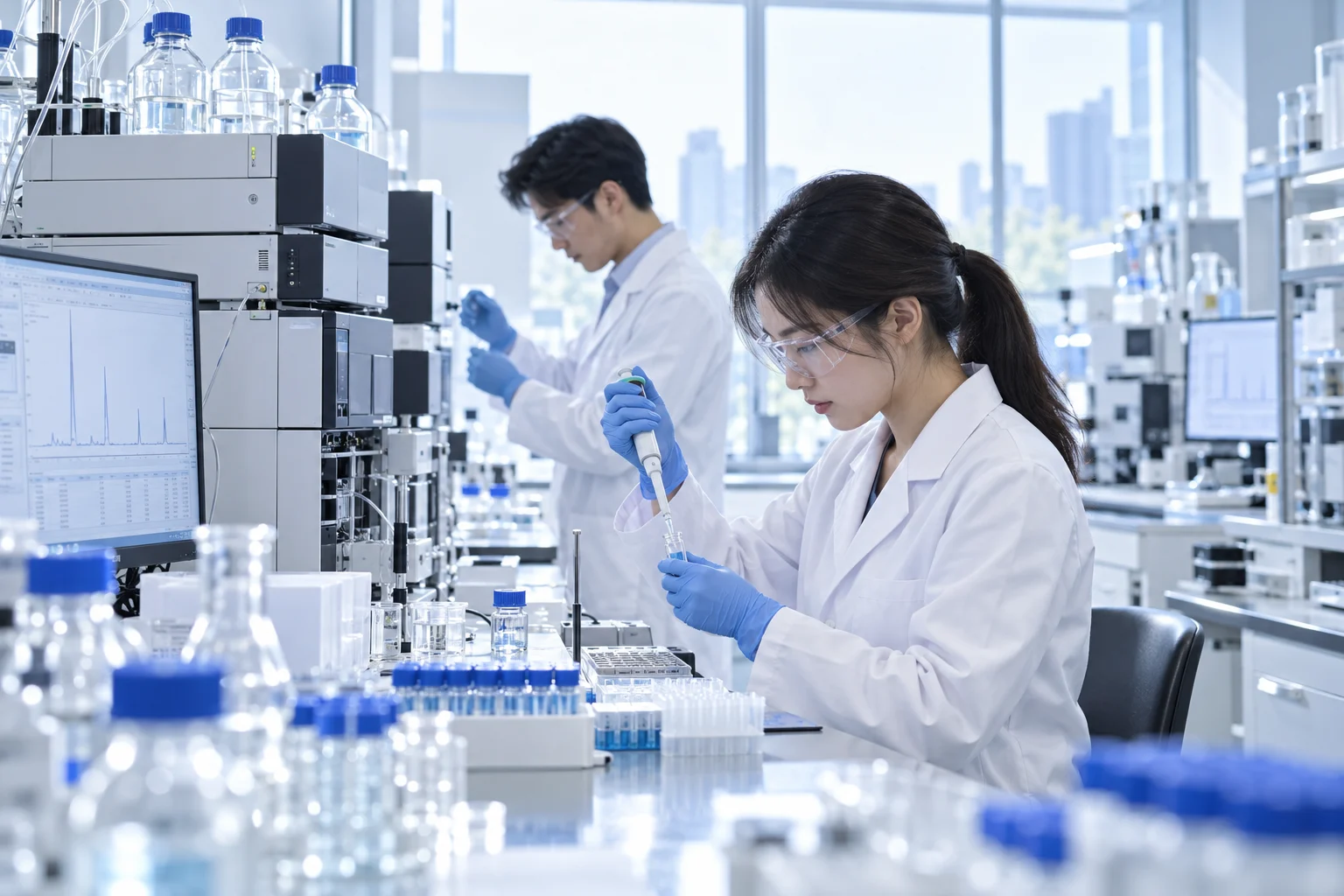
Concept image of formulation researchers working in a bright analytical laboratory
Concept image · Replace with actual authorized imagery.
RESEARCH & INNOVATION

Five Advanced Technologies, Empowered by Patents

01

FDF Freeze-Drying Technology

Patent No.: ZL201210572660.8

Low-temperature freeze-drying and fresh extraction help protect the activity of active ingredients.

02

RWD Rapid-Dissolving Technology

Patent No.: 201410187485.X

Rapid dissolution in about 15 seconds with mucosal absorption.

03

NLG Nano-Liposome Encapsulation Technology

Nano-encapsulation enables targeted delivery and improves absorption and bioavailability.

04

Supramolecular Co-Crystal Technology

Enables stable integration of multiple ingredients and enhances synergistic effects.

05

Secondary Fermentation Technology

Optimizes ingredients into small molecules, combines multiple benefits, and improves bioavailability.

Explore our research

Research Scope Collaborative Workflow Platform-specific Work Project Outputs Common Questions

RESEARCH SCOPE

Develop the formulation and the experience together.

Ingredient & matrix compatibility

Review identity, solubility or dispersibility, particle properties, sensitivity to moisture and temperature, and the fit with film-forming or freeze-dried matrices.

Taste & mouthfeel

Explore flavor, sweetness, bitterness management, texture and the overall oral experience. Sensory work is planned around ingredient safety, intended users and the agreed evaluation method.

Performance & stability

Define how appearance, unit consistency, disintegration, moisture and relevant ingredient markers will be evaluated. Select methods for the development question rather than relying on appearance alone.

COLLABORATIVE WORKFLOW

A staged route with clear decisions.

01

Define the brief

Agree the intended product, ingredient specification, unit dose, audience, market, packaging preferences and commercial constraints.

02

Assess feasibility

Identify the main formulation and process risks, compare the two platforms and propose an initial screening plan.

03

Build & refine prototypes

Explore matrix composition, ingredient incorporation and sensory options. Record observations and use them to choose the next iteration.

04

Evaluate in the intended pack

Assess agreed attributes and storage behavior with packaging considered early. Review unresolved risks before advancing.

05

Prepare the next stage

Agree the selected direction, further tests, process information and responsibilities needed for pilot work or transfer.

PLATFORM-SPECIFIC WORK

Different materials. Different process questions.

For oral films

Evaluate mixing and dispersion, wet-film uniformity, drying conditions, thickness, flexibility, cutting and release from packaging. Ingredient loading must be considered alongside the strip's size and oral experience.

For freeze-dried tablets

Evaluate solution or suspension behavior, filling consistency, matrix composition, freezing and drying conditions, residual moisture and the balance between porosity and handling strength.

PROJECT OUTPUTS

Make the next decision easier.

The scope and deliverables are agreed for each project. Depending on the stage, a development package may include:

  • A feasibility summary and key technical questions
  • Prototype descriptions and an iteration record
  • Agreed evaluation methods, observations and test results
  • A packaging and stability assessment plan
  • Process considerations and a proposed next-stage work plan

COMMON QUESTIONS

How research collaboration starts.

Can we start with an ingredient rather than a finished formula?

Yes. A specification, target dose and intended product brief provide a starting point. We then discuss sample needs and the questions an initial feasibility study should answer.

Can you assess an existing oral-film or tablet concept?

An existing formulation, process description, sample and known issue can be reviewed within an agreed scope. Examples include bitterness, inconsistent handling, appearance changes or packaging sensitivity.

How long does development take?

Timing depends on ingredient information, formulation complexity, sample supply, testing and the required development stage. Milestones and timing are proposed after reviewing the brief.

How do you handle confidential formulation information?

Confidentiality terms, information-sharing boundaries and ownership of project outputs should be agreed before sensitive formulas or proprietary process information are exchanged.